"Self-care is the ability of individuals, families and communities to promote health, prevent disease, maintain health and cope with illness and disability with or without the support of a health worker."
— World Health Organization
Self-care is the ability of individuals, families and communities to promote health, prevent disease, maintain health, and cope with physical and mental discomfort and disability — with or without the support of a health worker.
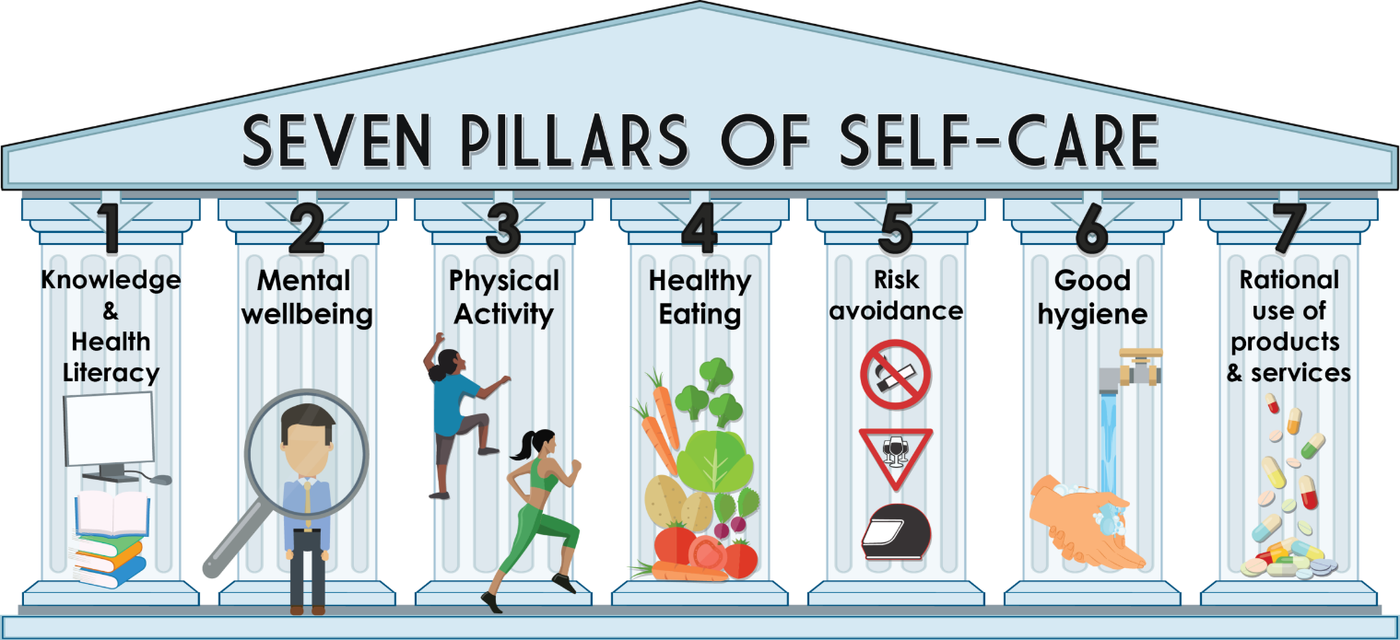
The Seven Pillars of Self-Care
Self-Care and Self-Medication
Health products (including OTC medicines) are the tools people use for self-care. When individuals have the right knowledge and suitable products, they can turn the intention to care for themselves into action.
Responsible Self-Medication
Responsible self-medication is the practice whereby individuals treat common ailments — preventing disease and relieving minor symptoms — using appropriately labelled medicines that are approved as safe and effective for use without medical supervision. (World Health Organization)
Self-Care in International Frameworks
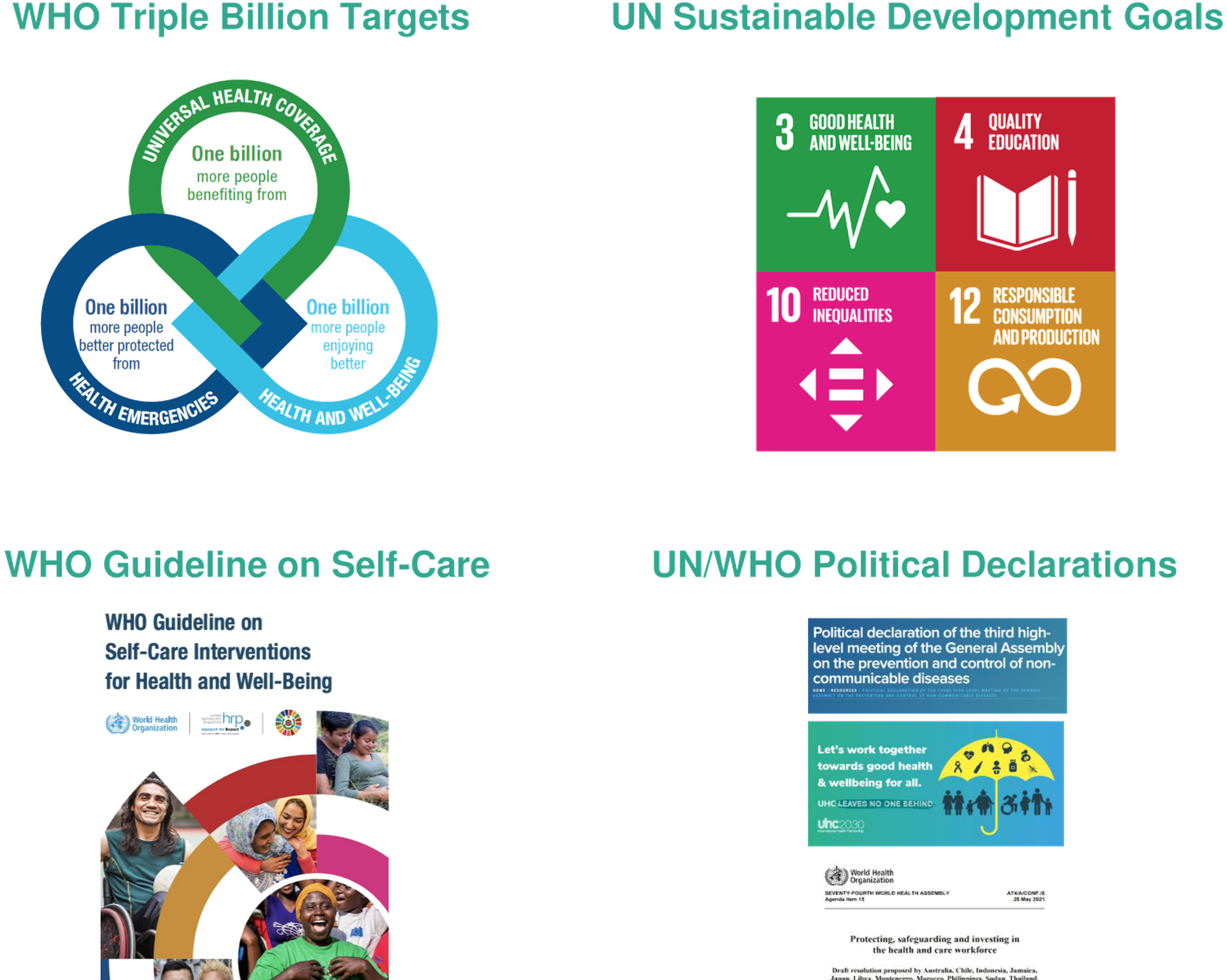
Self-care has been incorporated into many policies, declarations and goals of the United Nations (UN) and the World Health Organization (WHO), including the WHO Triple Billion Targets, the UN Sustainable Development Goals (SDGs), the WHO Guideline on Self-Care Interventions for Health and Well-Being, and UN/WHO political declarations.